Boehringer Ingelheim
Digital
UX/UI, Design & Technology
Dense clinical science,
turned into something you play.
For Boehringer Ingelheim's diabetes therapy Tradjenta, the work was to make regulated, information-heavy medical content genuinely engaging on a busy conference floor — a game-show quiz that gets doctors learning by competing, and an augmented-reality lesson that lets them hold the science in their hands. As Interactive Art Director with ID8 Creative, I directed the look and interaction across both.
Make the fact sheet fun.
Pharma content is dense and tightly regulated — efficacy data, safety information, full prescribing details that legally have to be present and readable. The trick was to wrap all of that in an experience a time-poor physician would actually choose to spend a minute with, without ever hiding the required information. Engagement on the surface, compliance underneath.
Doctors don't read fact sheets — but they'll play a round.
Learn the drug by beating the computer.
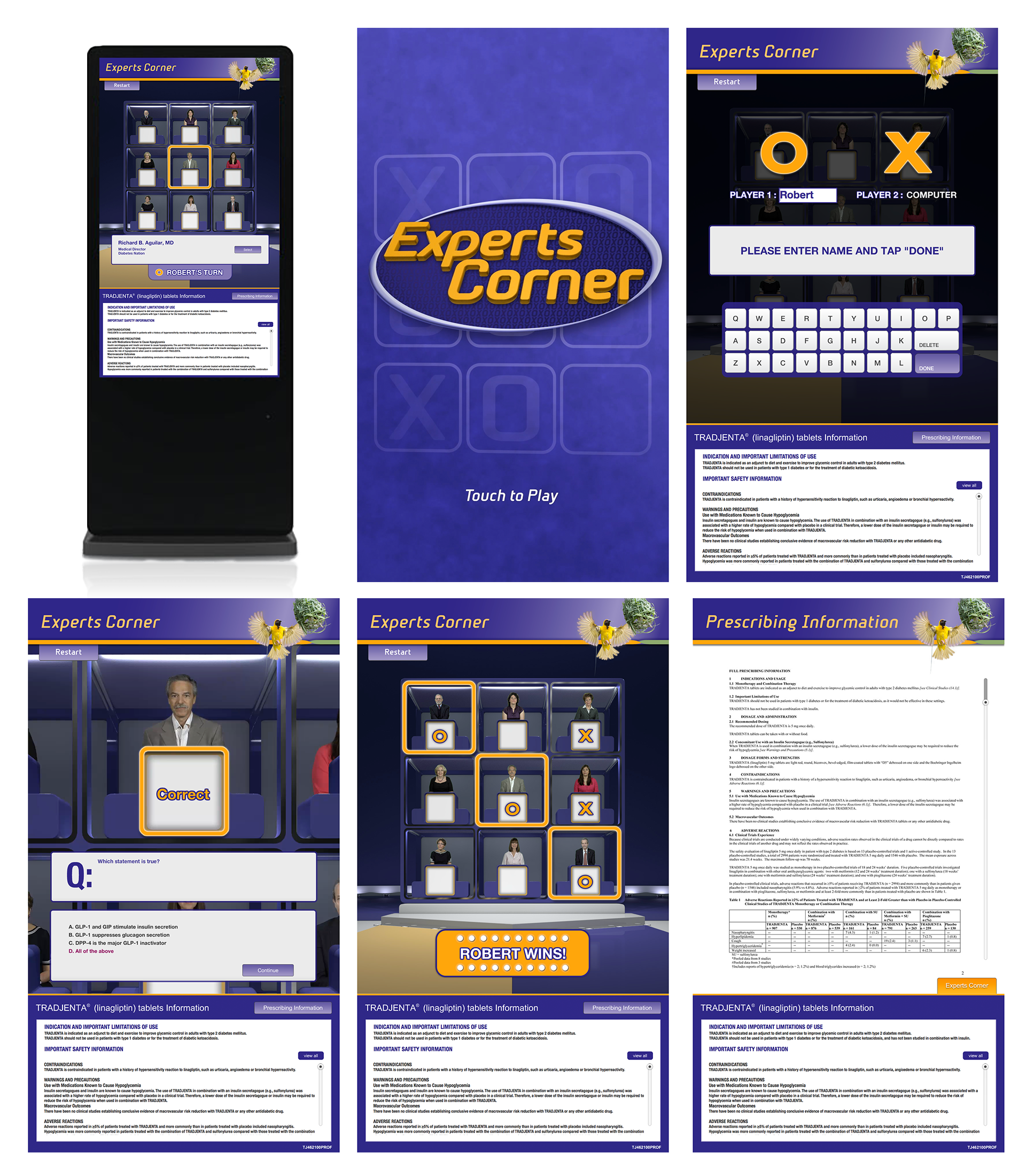
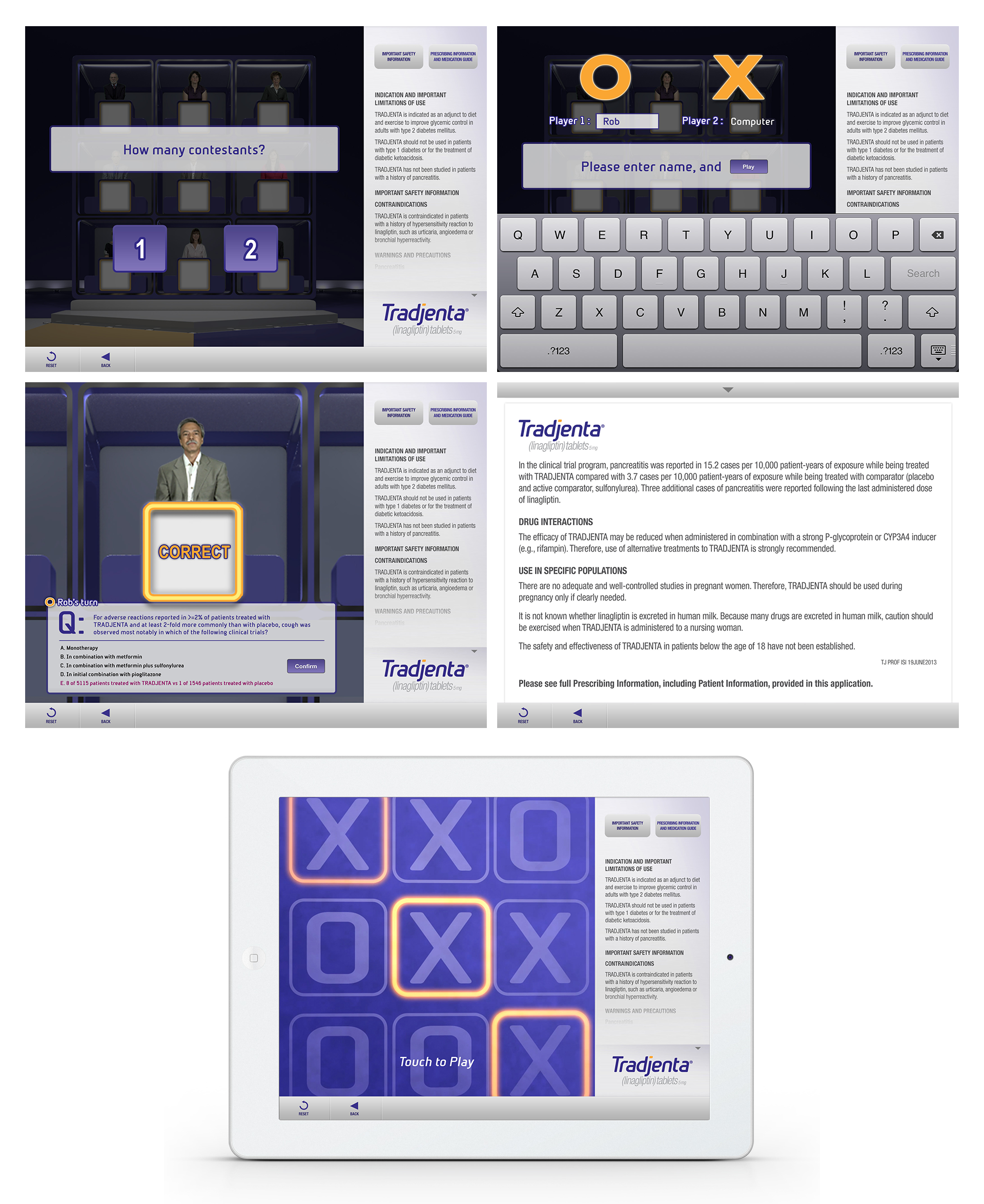
"Experts Corner" is a tic-tac-toe game show: a physician enters their name and plays the computer, claiming squares by answering clinical questions about Tradjenta correctly. Built for both a floor-standing touchscreen kiosk and an iPad, with a game-show set, live-action "experts" in the grid and the full safety and prescribing information always one tap away — playful up top, fully compliant underneath.
Hold the science in your hands.
The second experience uses augmented reality: point the camera at a printed marker card and a 3D kidney springs up, animating how the disease — and the drug — work at the level of renal glucose reabsorption. It turns an abstract mechanism of action into something a clinician can literally turn over and explore.